Placebo-controlled, blinded trial
n = 156 · Knee replacement · NIH-funded · The Journal of Arthroplasty
- 26%less opioid use in the first 24 hours
- 19%shorter hospital stay (20.8 vs 25.7 hours)
U.S. 501(c)(3) nonprofit · EIN 81-2500234
contact@painreliefinternational.orgDrug-free · Reusable · No electricity
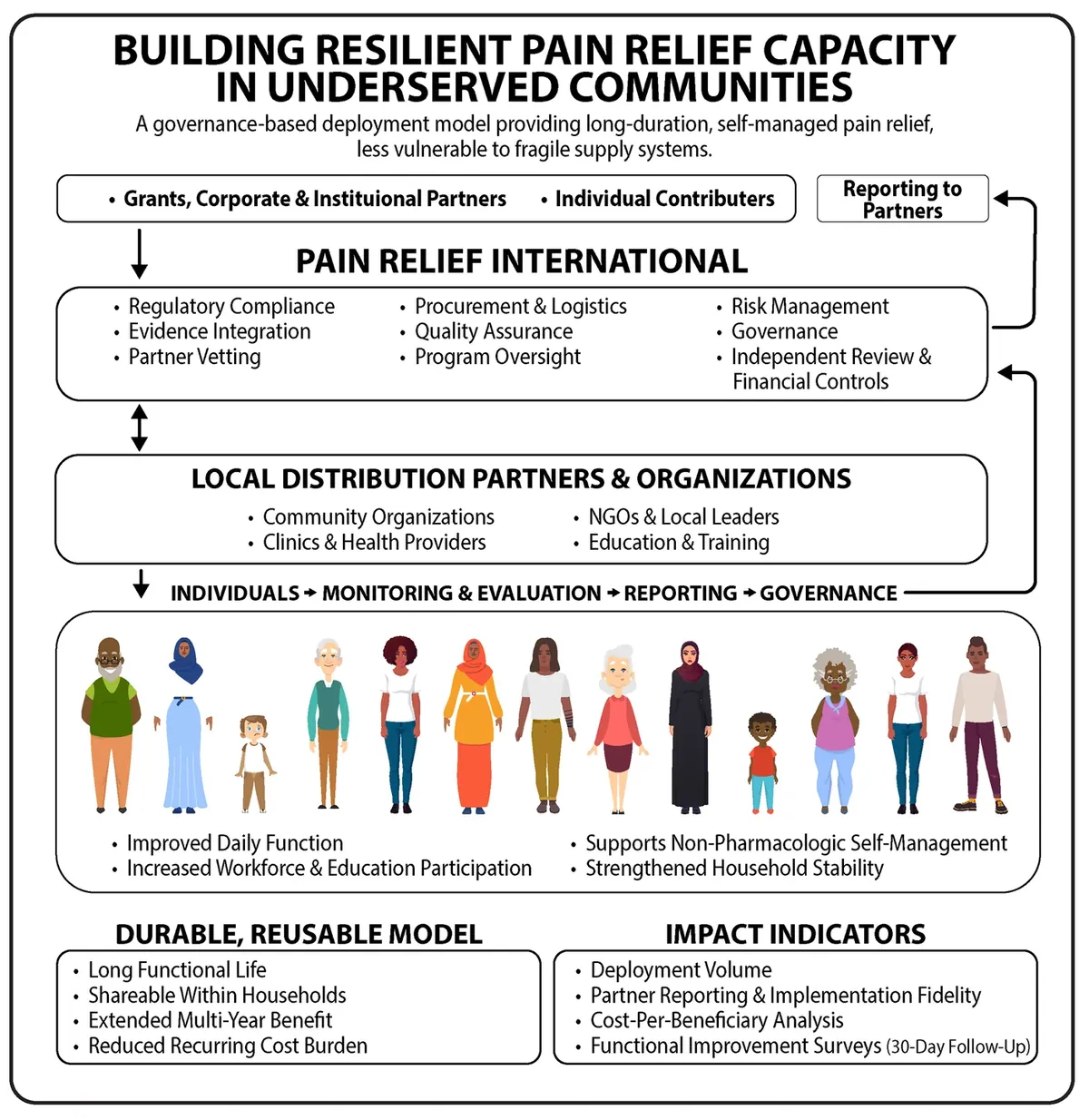
Pain Relief International builds distributed, reusable access to pain relief — restoring the ability to work, learn, and care for others without dependence on electricity, consumables, or continuous care systems.

5.5 Billion
people lack access to pain relief, limiting global participation
The global burden
“Burden” is not an abstraction. It means function lost: the field not worked, the class not attended, the child not carried, the shift not finished.
1.71B
people live with musculoskeletal conditions — the leading contributor to disability worldwide
619M
people live with low back pain, projected to reach 843 million by 2050
149M
years lived with disability from musculoskeletal conditions, every year
$635B
a year in treatment and lost productivity from chronic pain in the U.S. alone (upper estimate)
Sources: Global Burden of Disease study (IHME), published in The Lancet journals; Institute of Medicine ($560–635B estimate).
Why it matters
Pain affects more than the person living with it. It affects families, workplaces, schools, healthcare systems, and entire communities. Relief changes what people are able to do.
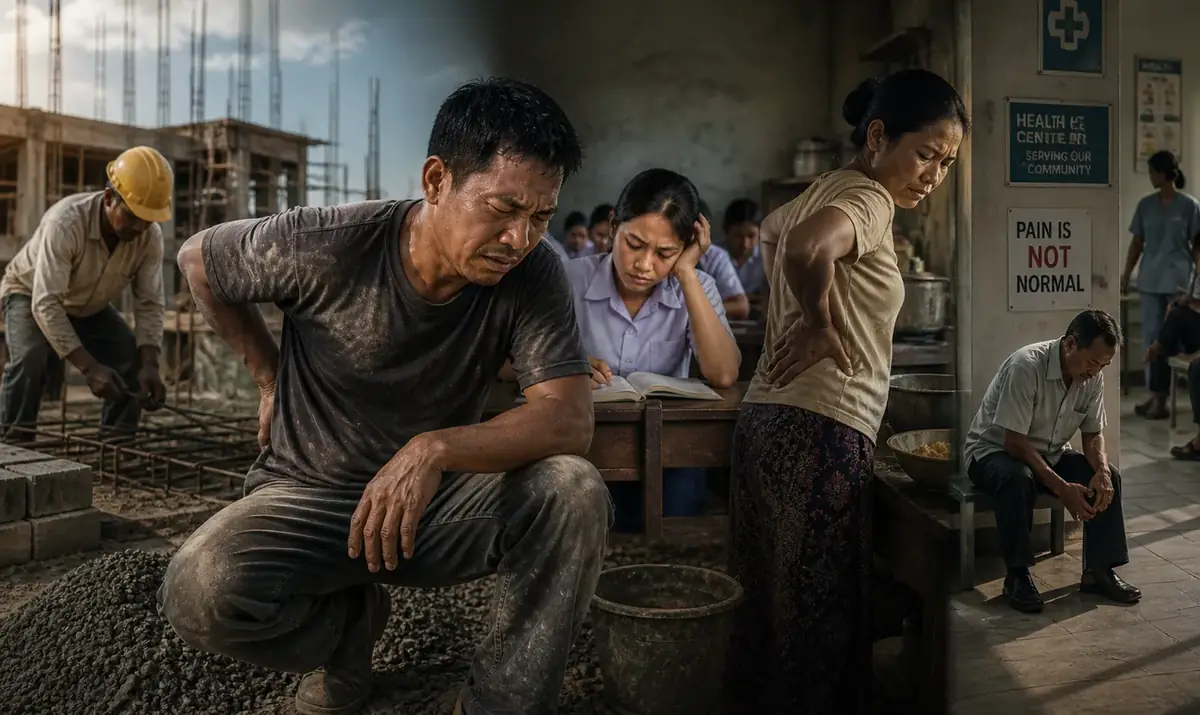
Untreated pain reduces productivity, weakens local economies, and limits national output.
Students in pain miss school, lose focus, and fall behind — reducing long-term opportunity.
Helps people recover sooner and return to everyday life, easing strain on health systems.
When caregivers are in pain, entire households are affected. Relief protects daily family function.
Pain reduces mobility, productivity, and response capacity at scale. Healthy communities begin with healthy people.
A better model for low-resource settings
The world's default answers to pain — medication, consumables, clinic-based care — all assume infrastructure. For hundreds of millions of people, those assumptions fail.
Our solution
Deployments are enabled by NeuroCuple® passive nano-capacitive technology — a reusable, drug-free device designed to function without electricity, consumables, or continuous medical supply chains.
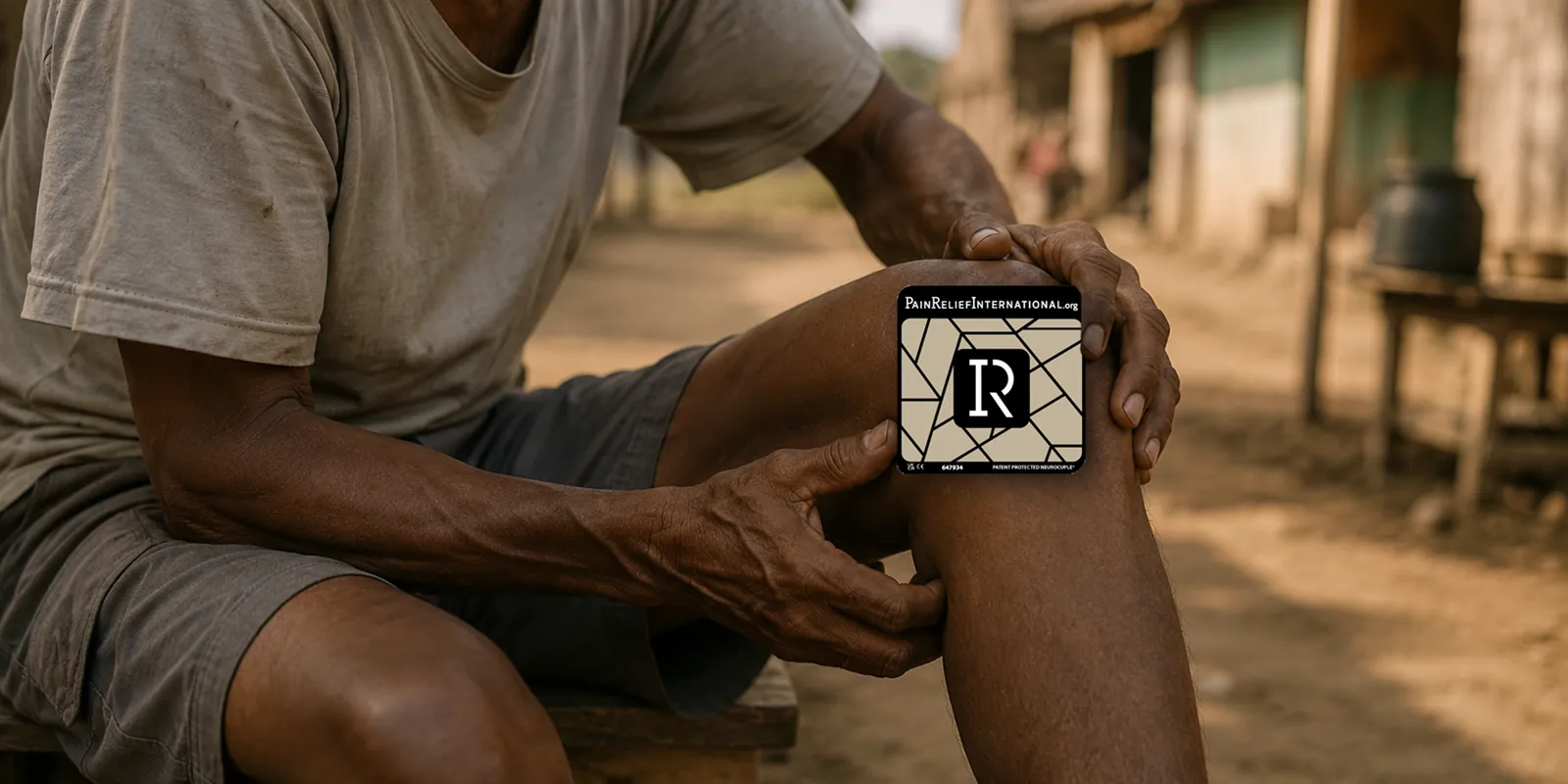
PRI 4x4 Deployment UnitThin, flexible, reusable for years
No clinical staff required. Deployable by trained local personnel anywhere.
Works without batteries, wires, charging, or external power.
Avoids recurring supply-chain dependence.
Long functional life reduces cost per beneficiary.
One device can support repeated use across a family.
Supports pain relief without adding pharmaceutical burden or overdose risk.
Clinical evidence
NeuroCuple® has been evaluated in two randomized clinical trials at the University of Pittsburgh Medical Center, including a placebo-controlled, blinded trial funded by the National Institutes of Health.
n = 156 · Knee replacement · NIH-funded · The Journal of Arthroplasty
n = 69 · Knee & hip replacement · Journal of Clinical Medicine
Both studies were in postoperative (surgical recovery) settings. Humanitarian deployments are measured through their own program reporting — devices delivered, training completed, usage tracked — not borrowed clinical claims.
Read the full evidenceImpact that multiplies
Because each device is durable, reusable, and drug-free, the impact continues for years after the initial deployment.
$20 per device, delivered, at program scale — $1,000,000 deploys 50,000 devices. Devices are shareable within a household, so cost per beneficiary keeps falling after the budget is spent.
Request a structured proposalPrograms
Keeping people active in work, education, and daily life by reducing the impact of untreated pain on participation and output.
Reducing patient burden and improving care delivery without adding strain to clinical infrastructure or supply chains.
Supporting women with menstrual and musculoskeletal pain to improve attendance, income stability, and maternal health.
Non-pharmacologic self-management tools that support continued activity and independence.
Enabling self-treatment where medical infrastructure is limited.
Building regional production capacity to strengthen economic sustainability and reduce distribution barriers.
How deployment scales
Deployed through structures governments and partners already operate — community health workers, school-adjacent programs, and existing distribution networks — with reporting at every stage.
A defined population and geography, deployed through existing channels with training and baseline measurement — designed to produce decision-grade data.
Proven pilots expand through the Global Pain Relief Initiative, with train-the-trainer capacity that stays local.
Deployment folds into national programs — school health, maternal health, workforce, disaster preparedness.
Find your way in
A deployment framework for public health systems, development banks, and bilateral programs.
Request a briefingStructured, measurable programs with unit economics, timelines, and deployment reporting.
Fund a deploymentAdd drug-free relief to programs you already run — devices travel flat and deploy with existing distributions.
Partner with usReusable, non-opioid pain care with training and outcome reporting for public health and treatment programs.
Explore the modelStories & research
How reusable, drug-free relief was distributed at scale without infrastructure or supply chains.
Read storyRecurring pain contributes to missed school days and reduced learning outcomes worldwide.
Read storyWHO and IHME data on pain, disability, and participation — over 1.7 billion people affected.
Read storyFAQ
Still have a question about the device, deployments, or giving? We'd love to hear from you.
Pain Relief International distributes reusable, long-lasting, drug-free pain relief technology to underserved communities, working with ministries, NGOs, and community health workers.
No. It requires no batteries, wires, charging, or external power.
Yes. The device is designed for long functional life and repeated use, and can be shared within a household.
Yes. It is specifically designed for low-resource and infrastructure-limited settings, including refugee and disaster-affected areas.
Two peer-reviewed randomized trials at UPMC, including an NIH-funded placebo-controlled trial, found reduced pain at rest, reduced immediate opioid use, and earlier discharge after surgery. The studies covered postoperative recovery, not chronic pain or community settings.
The device holds a U.S. FDA low-risk device designation for over-the-counter use. It is a comfort-support product and is not intended to diagnose, treat, cure, or prevent any disease.
Untreated pain reduces workforce participation, disrupts education, increases healthcare use, and can deepen poverty.
Yes. Pain Relief International works with donors, NGOs, government agencies, and community partners to support deployment, training, and impact measurement.
Restore possibility
Investments in Pain Relief International enable sustained, community-level access to drug-free pain relief — not a single-use intervention.